Discovering the Vital Features and Advantages of Steel Factories
Metal factories offer an essential feature in the production landscape. They transform basic materials into specific steel items for different industries. This process involves specialized techniques that guarantee top quality and effectiveness. The financial implications are significant, affecting local communities and work markets. As modern technology progresses, so do the practices within the industry. Recognizing these dynamics reveals much concerning the future of production and its function in sustainability. What exists in advance for metal foundries?
The Duty of Metal Shops in Manufacturing
Steel shops play a crucial role in the production industry by transforming raw materials right into usable steel items. These centers specialize in melting and casting metals, making use of a selection of strategies to create parts that serve numerous industries, including vehicle, aerospace, and construction. By transforming raw steel ores, scrap steel, and alloys into exact shapes and sizes, factories enable suppliers to create top quality products customized to certain applications.
Furthermore, metal factories contribute significantly to the economic situation by providing work and promoting innovation in metalworking technologies. They usually buy research and advancement to enhance efficiency and sustainability, reducing waste and energy consumption during manufacturing procedures. The capacity to create intricate geometries not only meets layout demands yet likewise improves total product efficiency. Basically, steel shops act as an important web link in the supply chain, making sure the schedule of essential steel parts for a myriad of applications in modern manufacturing.
Crucial Processes Involved in Steel Casting
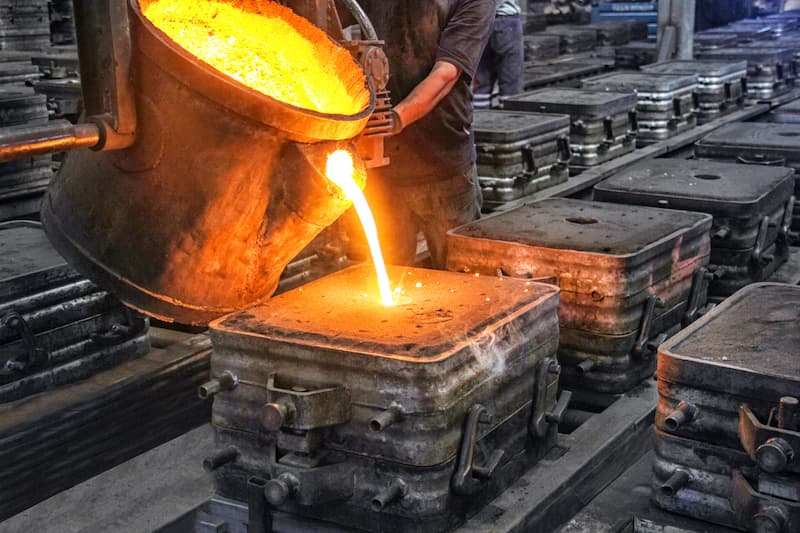
In the procedure of transforming basic materials right into ended up products, metal casting incorporates a number of crucial procedures that safeguard the manufacturing of top notch elements. Initially, the process starts with the preparation of molten metal, which commonly includes melting raw materials in a heater. When the metal reaches the desired temperature, it is put into a mold and mildew shaped to develop the end product.
Air conditioning follows, where the molten steel strengthens within the mold and mildew, handling its brand-new shape. After adequate air conditioning, the mold is gotten rid of, disclosing the cast part. This is commonly followed by completing processes, consisting of machining, to attain exact dimensions and surface top quality. Furthermore, assessments are carried out to determine that the castings fulfill specified tolerances and criteria. These important processes highlight the complex nature of metal spreading, emphasizing the essential duty that each action plays in creating trustworthy and resilient metal products.
Kinds of Metals Frequently Utilized in Shops
While numerous metals can be made use of in shops, a number of stand out because of their unique buildings and suitability for particular applications. Iron, especially in the type of cast iron, is renowned for its toughness, longevity, and outstanding casting features, making it optimal for machinery and auto parts. Aluminum is preferred for its lightweight nature and resistance to corrosion, frequently utilized in aerospace and transport industries. Copper alloys, such as bronze and brass, are selected for their remarkable conductivity and aesthetic appeal, typically discovered in attractive things and electrical parts. Steel, especially carbon steel, is valued for its durability and adaptability, extensively employed in building and production. Magnesium is appreciated for its low thickness and high strength-to-weight proportion, making it a preferred selection in applications needing lightweight products. Each of these steels offers unique advantages that satisfy the diverse demands of various markets.
Quality Assurance Measures in Steel Foundries
Quality control procedures in metal shops are necessary for making sure item honesty and compliance with industry criteria (Aluminum Foundry). Various examination techniques are utilized to analyze the residential properties of actors metals, while adherence to developed requirements and qualifications reinforces quality assurance. This methodical technique not just enhances functional performance however additionally builds client count on the final products
Inspection Techniques Summary
Efficient examination strategies are essential for maintaining high standards in metal factories, as they ensure that each item satisfies specified resistances and performance requirements. Various methods are utilized to evaluate the quality of castings, including aesthetic evaluations, dimensional checks, and non-destructive screening (NDT) Visual assessments allow drivers to recognize surface area issues such as cracks or additions, while dimensional checks confirm that parts comply with develop specs. NDT techniques, such as ultrasonic and radiographic screening, offer deeper understandings right into inner problems without harming the item. Furthermore, automated inspection systems are increasingly made use of to boost accuracy and effectiveness. With each other, these examination techniques play a considerable duty in safeguarding product integrity and consumer complete satisfaction within the competitive landscape of steel factories.
Requirements and Certifications
In the domain name of metal factories, adherence to developed requirements and certifications serves as a keystone for top quality control procedures. These criteria, such as ISO 9001 and ASTM, provide structures that assure regular product top quality and dependability. Qualification processes entail extensive evaluations, including audits and inspections, verifying that factories meet specific efficiency criteria. Compliance with these standards not just improves product stability yet also cultivates consumer depend on and fulfillment. Furthermore, qualification can open up brand-new markets, as numerous industries need conformity for procurement. By carrying out these quality assurance actions, metal factories can reduce flaws, optimize manufacturing procedures, and maintain an one-upmanship in the industry. Generally, accreditations and standards play a critical function in guaranteeing the success and sustainability of steel factories.
Technologies and Technologies in Foundry Procedures
As the need for precision and efficiency in metal spreading proceeds to expand, foundries are increasingly taking on innovations and technologies that enhance their procedures. Automation plays a crucial function, with robotic systems improving procedures such as mold handling and spreading. This not official statement only lowers labor costs however additionally lessens human error, resulting in enhanced product quality.
Additionally, improvements in computer-aided layout (CAD) and simulation software program allow shops to enhance designs before manufacturing, allowing for faster turn-around times. Including 3D printing innovation for creating cores and molds additionally increases manufacturing and permits complicated geometries that typical methods can not accomplish.
In addition, the integration of data analytics and the Net of Points (IoT) gives real-time monitoring of equipment and procedures, enhancing predictive upkeep and operational performance. These innovations jointly add to a more responsive, dexterous, and affordable shop environment, positioning them well to satisfy evolving market needs.
Economic Influence of Metal Factories on Regional Areas
The improvements in technology within steel shops not just boost manufacturing capacities but also significantly influence local economies. Steel foundries offer as a considerable resource of employment, supplying work for skilled workers and contributing to the financial security of their areas (Metal Casting). These facilities frequently stimulate neighborhood businesses, as they call for a range of services and products, from basic materials to transportation and logistics. The presence of a steel shop can also draw in associated hop over to these guys markets, fostering a network of distributors and sustaining organizations that flourish in closeness to manufacturing centers
Moreover, foundries add to the tax base, creating revenue for regional governments that can be utilized for civil services and framework improvements. The financial causal sequence includes community development, as factories typically take part in local initiatives and support workforce training programs. Generally, metal factories play an important function in strengthening the economic landscape of their areas, guaranteeing development and sustainability.
Sustainability Practices in the Metal Foundry Sector
The steel factory industry is significantly taking on sustainability methods to decrease its environmental footprint. Key approaches include recycling metal scrap, executing power efficiency procedures, and making use of environmentally friendly spreading procedures. These campaigns not only add to resource preservation but also improve the sector's general sustainability account.
Recycling Metal Scrap
Reusing metal scrap stands as a cornerstone of sustainability methods within the metal shop market. This procedure not just saves natural deposits but likewise considerably lowers landfill waste. By recovering scrap steel, factories can decrease the requirement for virgin materials, lessening ecological effect and energy consumption connected with mining and extraction. Moreover, the recycling of steel scrap fosters a circular economic climate, where products are reused and repurposed, creating a more sustainable manufacturing cycle. Foundries usually apply innovative sorting and handling technologies to enhance reusing efficiency, making sure top quality result. As the sector increasingly prioritizes eco-friendly methods, the recycling of steel scrap continues to be a vital component, promoting both economic stability and ecological stewardship for future generations.
Energy Efficiency Procedures
Sustainability in the steel foundry market extends past recycling methods to include energy performance procedures. Foundries are significantly adopting innovations that reduce energy intake throughout steel manufacturing learn this here now and spreading. Applying innovative melting strategies, such as induction melting, allows for even more precise temperature control and minimized energy waste. Furthermore, enhancing heater operations with warmth recuperation systems captures and reuses excess warm, notably lowering general power needs. The assimilation of energy-efficient lighting and automation also boosts functional effectiveness. By buying these energy efficiency procedures, factories not just minimize their carbon footprint however additionally realize cost savings, adding to an extra sustainable and financially feasible market. Adopting such techniques is essential for fulfilling governing criteria and dealing with expanding ecological concerns.
Eco-Friendly Casting Processes
While conventional casting techniques have actually served the metal factory market for years, environment-friendly casting procedures are now acquiring prestige as an essential element of sustainable production. These cutting-edge methods prioritize the reduction of waste, power consumption, and harmful exhausts. Many shops are embracing water-based coverings and recyclable products, reducing ecological impact. In addition, developments in 3D printing modern technology help with much more efficient styles, decreasing the requirement for comprehensive product usage. Closed-loop systems are also being executed, enabling the recycling of metals and various other spin-offs. By embracing these eco-friendly techniques, metal foundries not just boost their functional efficiency yet additionally contribute to the international initiative toward sustainability, aligning with boosting customer demand for environmentally liable products.
Often Asked Questions
What Precaution Are Executed in Steel Shops?
Safety and security actions in metal factories consist of individual protective tools, appropriate ventilation systems, regular safety and security training, threat communication, emergency reaction methods, and regular equipment upkeep to lessen dangers related to heats and harmful materials.
How Do Factories Deal With Hazardous Materials?
What Are Typical Job Opportunities in Metal Foundries?
Usual career opportunities in metal foundries consist of functions such as factory specialist, melting operator, top quality control inspector, upkeep designer, and production manager, each contributing to the effective procedure and result of steel casting processes.
How Do Foundries Manage Waste and Recycling?
Factories manage waste and reusing with systematic processes, including the collection of scrap steel, reusing materials, and executing ecologically friendly practices (Aluminum Foundry). These techniques aid minimize ecological influence while promoting source effectiveness within the market
What Are the Environmental Regulations for Steel Foundries?

Metal foundries play a crucial duty in the manufacturing field by changing raw products right into useful steel products. Quality control actions in metal factories are important for guaranteeing product honesty and compliance with market standards. By carrying out these quality control steps, steel shops can minimize flaws, optimize production procedures, and keep a competitive side in the sector. Recycling steel scrap stands as a keystone of sustainability methods within the metal factory sector. While typical casting approaches have offered the steel shop sector for decades, green spreading procedures are currently acquiring importance as a necessary part of lasting production.